Friday, September 1, 2017

Facts You Didn’t Know About Rock Salt

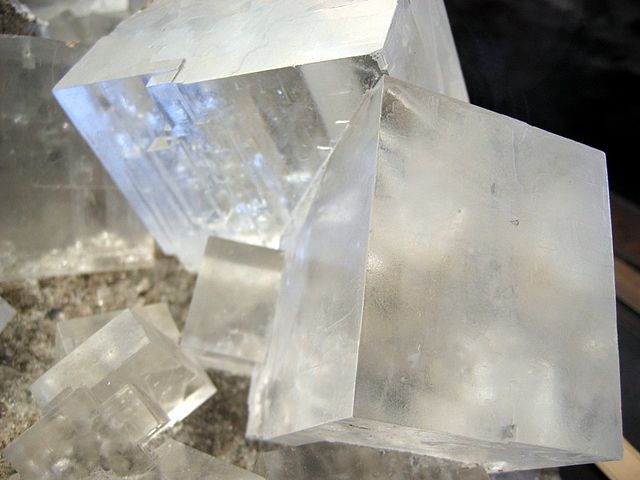
Rock salt is the purest form of salt; it is totally unprocessed, unrefined and raw. There are different kinds of rock salts as there are different kinds of salts, and they can vary in color from white to pink. Rock salts are highly crystallized salt, devoid of chemical and environmental pollutants or contaminants. It is also a lot more granular with large chunky pieces unlike regular table salt, even though both are sodium chloride.

Gritting Salt

Rock salt’s popular domestic application comes around during snow fall, when residents pull out that big old bag of rock salt you hadn’t seen all year. Rock salts are used as ice melter salts that you can throw on paved surfaces that have been cleared of ice, to prevent ice to start forming on it. You can even use it to manage snow because it can prevent snow from settling. Also, laying down a layer of salt isn’t required either; these salts are sufficient in small quantities to weaken the ice enough to be cleared out easily.

But, How?

These gritting salts achieve this due to a simple scientific principle. Impurities dissolved in a substance, will reduce its specific melting point, so it melts at a lower temperature than its pure form.  Dissolved impurities also increase the boiling point which means they evaporate at a higher temperature as compared to their pure form. The difference in melting temperatures of a particular substance is also a good test of its purity. Because salts are highly soluble in water, snow and ice melt easy and brittle down when gritting salts are added to them.

Some Benefits of Rock Salt:

·         Ice cream: Everybody likes ice cream, but most may not know that rock salts were and can be used in making ice creams. The addition of rock salt is followed with some melted water after which the dissolved salt will decrease its freezing point. So, when the ice melts, it absorbs the heat from the surrounding water, but the water will still not freeze. This is largely responsible for the melting ice cream to still feel shockingly cold in every bite.

·         Gardening and farming: Sodium chloride is a common natural chemical compound and it may surprise you to know but appropriately small quantities of rock salt can also serve as environment friendly yet effective weed killers. A solution of rock salt and water can do wonders for your weed infested garden or farm.

·         Other Industrial uses: The industrial uses of rock salt are a world on its own with extensive applications, ranging from textile to tanning industries, which use brine solutions of rock salt to soften and heal the tissues of their standardized batch. The food industry is a big consumer of rock salts. Apart from ice creams, they are also used as dressing, baking goods, toppings, seasonings, cereal, meat, cheese and even in snacks.

The paper and pulp industry needs rock salt for bleaching of soda as an environment friendly alternative for chlorine. The oil giants in the Fortune 500 also use rock salt by the bulk on mud during drilling of land, in order to prevent fermentation of the mud consequently, facilitating the drilling process.


Whether it is for domestic or commercial use, Rock Salt USA provides the best quality rock salt in USA at reasonable prices. Visit their website for more information. 

Salt, Food and Implications on Health

We all love salt and we cannot help it. The absence of salt becomes apparent immediately with the first bite. You can just tell there’s something missing and if you have a finer palate, you can detect that it’s actually salt that is missing.

Processed food is greatly responsible for the daily recommended salt intake for Americans. In fact, processed foods and restaurant foods account for more than two thirds of the average American’s daily recommended intake. It has also been shown that the highest sodium consumption from processed food was found amongst people between 18 and 29 years of age.

Health Implications of Salt

Salt is comprised of two very essential minerals for our bodies - sodium and chlorine. Every 2.55 grams of salt contains 1 gram of sodium. Salt is an essential part of our diet and all adults must consume 1.6 grams of sodium or about 4 grams of salt per day.  Salt is added to foods to enhance flavors and it surely does a good job at that.

Sodium is required by our bodies for water retention in our kidneys and for maintaining the intracellular osmotic pressure. Chlorine ions are also used for osmotic pressure regulation within body cells. Additionally, sodium ions allow the generation and passing of electrical signals along our nerves and neurons. If it wasn’t for sodium, these processes wouldn’t occur like they do in a healthy individual.

However, we don’t need to worry a lot about sodium and chlorine deficiency any time soon. It is recommended for adults not to exceed intake of 6 grams of salt per day. National diet & nutrition survey showed that the average salt intake is 8.6 grams of salt per day among Americans. This is one of the driving factors for the high prevalence of heart diseases and high blood pressure.

The annual Salt Awareness Week spreads awareness of excess salt intake. Take a quick look at the recommended maximum salt intakes according to age, so you can keep the salt intake of your loved ones within the appropriate range.


Age
Maximum Salt Intake
0-6 months
Less than 1g / day
6-12 months
1g / day
1-3 years
2g / day
4-6 years
3g / day
7-10 years
5g / day
11 years and above
6g / day


Rock Salt, Sea Salt and Table Salt

People often look for the healthiest of all the salts available. It is important to realize that sea salt, rock salt and table salt all contain about 100% sodium chloride. Therefore, you can’t really place precedence of one salt over the other based on their sodium chloride content. All of these can work as good sodium sources, but may differ in taste. Sea salts and rock salts tend to be a tad bit more expensive than your average table salts. Sea salts are produced by the evaporation of sea water while rock salts are mined as mineral halites.


If you’re looking for prime quality rock salts, whether it is ice melt salt, calcium chloride or magnesium chloride, Rock Salt USA can provide you all of these at an affordable price.

Rock Salt and Health

The ubiquitous uses of rock salt in the industry consist of the majority of all rock salt applications. However, not many of us are aware of rock salt’s personal benefits, and what it can do for our health in particular. Rock salts are mineral halites and their most commonly used type has a pure chemical composition of sodium chloride. In fact, rock salts are highly pure salts, unlike our table salt that is iodized. The rock salt is a highly crystallized crystal lattice structure consisting of sodium chloride only.

It’s mostly colorless or white but the color can vary if there are impurities present. In the Himalayan region, they call it Himalayan crystal salt. This rock salt also tends to taste less salty and is free of the effect of chemical processes and can be used as a healthy substitute for the common table salt, since it is rich in minerals.

Let’s go through some less talked about health benefits of the rock salt

·         Minerals are vital micronutrients that are required by our bodies to carry out normal biochemical function of your organs, and rock salts are rich in minerals. In fact, it contains about 84 trace elements out of the total 92 identified up till now. A little touch of rock salt in your diet and you don’t need to worry about magnesium or calcium deficiencies. Rock salt can replenish the mineral deficiency of your body to ensure your organs continue to work optimally.

·         Rock salts can be of particular help in respiratory illnesses such as bronchitis. There may be air borne free ions or free radicals floating around in your environment to cause respiratory irritation and stimulate ailments such as bronchitis. Using lamps made from rock salt is a great way to eliminate those harmful ions from air. Rock salt lamps can serve as excellent natural air ionizers.

·         Salt generally hold irreplaceable value in our physiology. It is responsible for the water retention mechanism in place within the loop of Henle of our renal nephron. Therefore, in order to absorb an adequate amount of water, you have to have a high salt content in your kidney’s Medulla section.

·         Rock salts are salts in its purest form, and it may surprise you to know that nervous impulse transmission would not be possible without sodium ion exchange across the membrane of our neurons. Sodium is vital, and you wouldn’t be able to move or carry out normal brain function if it wasn’t for the sodium-potassium ion exchange mechanism. Rock salts are a great way to keep up with your daily recommended intake of sodium.

·         You can use rock salts for dental purposes too! In fact, you can add some rock salt to boiled water, and use the solution to gargle with. This not only serves as an effective disinfectant, but can also whiten your teeth. It can even relieve a sore throat.

·         Rock salts can also make for very relaxing bath salts. You can add rock salt crystals in your bath water and enjoy the bath. This will help detoxify your body in addition to lowering your blood pressure and inducing a calming sleep like state that we could all use after a long week!


It doesn’t matter if it is a domestic use you’re looking for or pallets of rock salt for commercial purposes, you can have prime quality pure rock salt in USA at an affordable price at Rock Salt USA. 

You can go through their products at their website for more information.

Understanding the Difference between Rock Salt & Sea Salt

If you’re going through the market looking for exotic gourmet flavors or de icing materials, you’ll come across two popular kinds of salts: sea salt and rock salt. Both types of salts can be used as table salt alternatives. This blog will help you learn the difference between both, so you know your salts better. Let’s get to it!


Fundamental Differences

Sea salt is obtained through the evaporation of sea water. The evaporation leaves behind the residual solids (mainly salt) from the sea water which can be collected and sold for your tasting pleasure.
The drying sea water leaves behind all the impurities, so there are high chances of contaminants mixing with the salt. Therefore, sea salt is often treated using pure water filtration methods to minimize impurities in the sea salt. So, from the ocean to the box, sea salt has to be processed.

Sea salts are sold as gourmet salts that can be used by chefs or those with a finer palate. It is added in food like you would with normal table salt, and many claim that it tastes different than rock salt. So, for those of you looking for that tangy sea flavor element for your food, gourmet sea salts might just be the answer. The content of sea salts may vary because differences in salinity exist between seas. 

Therefore, where you harvest your sea salt can change the sodium chloride content of it accordingly.

Coming to the much versatile rock salt now, and how it’s made. Rock is actually mined from the earth. It is found as a mineral halite and has a rather interesting geological formation if compared with that of the flavorsome sea salt.

When lakes and oceans dry out, they leave evaporated sediment behind which eventually becomes a part of the earth’s strata. Rock salt is naturally made while sea salt is manmade.

Rock salt is usually cheaper than sea salt too. Additionally, since mineral halites vary in color due to the presence of impurities, so does rock salt. Pure rock salt is white in color. Typical rock salt impurities include gypsum and sylvite. The aptly named rock salt is a highly crystallized salt that comes in large chunks.

Both sea salt and rock salts contain a high amount of sodium chloride, typically 100%. The sea salts are relatively flaky, while rock salts are large halite chunks.


Food and Other Applications:

Both of these salts are high in sodium chloride therefore, consuming both in excessive quantities can be harmful when you’re looking which one is the least harmful for consumption, or which one is healthier (. Rock salt can be harvested from salt mines as brine and treated with chemicals to remove minerals as part of the refining process. These removed minerals can be sold for industrial use. Furthermore, rock salts are widely used as ice melting agents to make ice cream. Sea salt is usually restricted as a food additive. Sea salts have also been used for food preservation.

If you’re looking for ice melter salts or rock salt for food, you can have the finest quality over at Rock Salt USA where you can get different kinds of rock salts at affordable rates.

Industrial Applications of Salt

New federal data shows that more than 90% of Americans consume too much sodium. Yikes! Perhaps, it may be of some help to know that there are various other uses salt can be put to other than the age old application as a flavor enhancer (something we’ve had too much of now).

Here’s a useful tip: If you ever happen to spill some wine on your clothes, salt is a great way to get the wine out of the cloth fabric. After you find yourself in the unfortunate event of having that fine wine spill over one of your ‘good’ dresses”’, blot it up as much as you can and then apply salt on the stain. The salt will absorb any remaining wine from your fabric.

Not only are the domestic uses of salt extensive, it also has a wide range of industrial applications. They’re often not talked about much. There’s not much difference between the two since both are essentially sodium chloride. However, rock salts tend to be the purest form of salt. You can find top quality bag salt, ice melter salt, magnesium chloride, calcium chloride and bulk salt at Rock Salt USA, a trusted rock salt supplier that deals in the finest quality rock salts.

Let’s go through some of these industrial uses of salt or rock salt.

·         Industrial drilling, especially in the oil industry, is greatly dependent upon the use of salt to increase the density of mud and soil to facilitate the drilling process. A large quantity of salt is required for on land drilling.

·         Pharmaceutical companies produce saline solutions that are used for intravenous drug administration, wound cleaning, contact lens removal and many other widespread, ubiquitous uses. In fact, capsules may also be manufactured with the use of salt in the process. The medical and pharmaceutical industries alone are responsible for a sizable portion of industrial salt uses.

·         Did you know that 60-80% salt is used to improve the safety of public transit? Ice melting salts are used on roads and pavements to minimize auto motor accidents and injuries.

·         The textile and tanning industries utilize brine (concentrated salt solution) to soften the tissues of their raw material which includes hides and cloth.

·         The food industry is one of the largest industrial consumers of rock salt. Rock salts are used in baked goods, dressings, toppings, seasonings, cereals, snacks, meat, cheese and even to make ice cream.

·         With increasing concerns of global warming and environmental pollution, the use of chlorine has been discouraged for industrial use. The paper and pulp industries that used chlorine for bleaching of soda are now turning to rock salt as an alternative.

·         Rubber manufacturers use salt to separate rubber and ceramic manufacturers need salt to vitrify the surfaces of heated clays.

·         Furthermore, industrial salts are also heavily used as fillers for detergents and solvents so that the chemical can be more soluble in water. For example, soap manufacturing requires salt because of its ability to separate the compounds present in soap.

·         Salts are used for maintaining salinity levels where required. Solar pond facilities that produce renewable energy need salt to maintain the required salinity in water. With the shift in our energy demands towards renewable energy sources, facilities like solar ponds have become more important now.


Weather is industrial or domestic use, find a range of the best quality bag salt at Rock Salt USA.

How to Make Crystallized Salt

Did you know that the production of salt was legally restricted in ancient times, so it was historically used as a method of trade, for barter, and also as currency? Today, about a quarter billion tons of salt is produced every year globally. What do we even do with so much salt? Here’s a fun idea - make crystals! That’s right. You can actually make beautiful, pristine crystals from salt yourself.

Salt is an extremely water soluble solute. In fact, most of our salt comes from the sea and some is mined to meet our demand of bulk rock salt. But the question is: How we can make a crystal out of the flaky salt?

Crystallization takes place when the concentration of the solute exceeds solubility in a particular solvent. Therefore, the residual un-dissolved solute particles latch onto each other to form a crystal consisting of sodium chloride’s signature crystal lattice structure. This is how rock salts are naturally formed too.

Here’s how you can make your own salt crystals at home.

1.       Heat water: Pour around 120mL of water and wait for it to boil.

2.       Pick your salt: You can add plain old table salt or choose any other salt. Do not use iodized salt because they don’t work well. We recommend alum because it crystallizes relatively fast and you can find it easily too. You can find other types of salts such magnesium chloride, calcium chloride and many others at Rock Salt USA.

3.       Stir until you reach saturation: Take the pan off heat and add in about 60-120 mL of salt and keep stirring until water becomes clear again. Clarity in water means all the salt has been dissolved. At this point, keep adding more salt and stir until the solution reaches saturation and no more salt can be dissolved. At this point, you’ve made a supersaturated solution which basically means the solution contains more salt than water can hold. Supersaturated solutions start forming crystals easily.

4.       Dispense the solution: Dispense the supersaturated solution in a clean container, preferably a transparent jar. You can filter the solution with a filter paper as you pour it, so as to get rid of any impurities to ensure your crystals are finer.

5.       Add food coloring: This step is optional and comes down to personal taste really. You can add in the food coloring that you want your crystals to be in the solution, or you can skip this step all together if you want to have translucent crystals.

6.       Prepare a suspension system for crystal formation: All you have to do now is provide the salt molecules in the supersaturated solution, something to latch on to. Grab a pencil long enough to lie across the top of your jar and tie a string around it. Cut the hanging string at a length that can be submerged in the solution without touching the bottom of the jar. Place the pencil on top of the jar so the hanging string extends into the solution and then put the whole thing at an undisturbed place.

7.       Wait: Alum crystals start growing within a few hours, so does Epsom salt. So, keep checking periodically. Some salts may take a day or two. The longer you wait, the bigger your crystals will grow. When you feel you’ve achieved the crystal size you wanted, you can take them out!


If you’re looking for different kinds of top quality rock salts such as ice melt, bag salt and bulk rock salt, Rock Salt USA is the best in the business.

6 Ways of Extracting Salt

The salt industry in the United State of America was one of the earliest mineral industries on earth that involved physically mining the salt from sea or from within the earth. Now, it has become a billion dollar industry and second only to the Chinese salt industry. In fact, the United States of America and China are responsible for producing 40% of the world’s quarter billion tons of salt produced every year! That’s a lot of salt!

The application of salt does not confine to food though. It is used in several other industrial processes and domestic uses such as manufacturing ice creams and melting frozen pavements. Even though salt’s presence may be ubiquitous, not many wonder about the methods used to extract and purify the quarter billion tons of salt that goes around every year!

Let’s go through some of those methods.


Evaporation:

This common method leaches salt out of rock salt layers lying at depths of around 400 meters by feeding in water and having the concentrated brine flowing through the pipelines and into the field collection tank. The extracted brine solution then goes through softening and crystallization in the evaporator plant. This type of common salt was referred to as evaporated or cooked salt.


Leaching/Drilling:

A typical leaching system consists of 3 pipes laid into boreholes. The innermost pipe carries the concentrated brine solution upward, the second pipe carries fresh water into the ground, and the third pipe pumps nitrogen as a protective measure to prevent quick leaching between the counter current brine and inflow of fresh water. The brine is then carried from the drilling field (that may stretch for several kilometers) to the collection tank where it can be seen as a clear liquid.


Brine purification/softening:

In this process, the raw brine from drilling field is eventually pumped into reactor tanks of the brine softening plant where impurities such as calcium and magnesium salts are removed from the brine. If the brine goes through the heating chamber, these secondary salts form a rock hard coating around the chamber walls, making the process less efficient each time. Therefore, precipitation involving the addition of quick lime, soda and carbon dioxide is used to precipitate these impurities out as gypsum and lime.


Crystallization:

Brine is passed through steam as hot as 140⁰C causing brine to evaporate as ‘flash steam’. Flash steam is then passed through the evaporator where salt crystallizes at the lower end as a wet paste.


Drying:

The wet paste then goes to the centrifuges where the centrifugal force is used to separate the water from salt, giving the resulting salt its signature snow white look. Then, hot airstream is used to drive any residual water out. This thorough process leaves only a few milliliters of water in every 100kg of salt.


Open cast mining:

Mining methods can be used to extract dry rock salt from salt containing saliniferous rocks. Most salt mines are present underground. However, in salt deserts, rock salt can be mined right off the surface too, through open cast mining. Rock salts form over thousands of years through the drying of primordial oceans and lagoons which left behind salt. Over the passage of time, rock formations over these salt layers embed them deep inside mountains or underground.


Rock salt offers versatile applications and can be used for many domestic and industrial purposes. If you’re looking for top quality USA grade rock salt, visit Rock Salt USA.